
News & events
Introducing the Research and Innovation Funding Circle: Interview with co-lead Sophia Ivarsson
19 October 2026
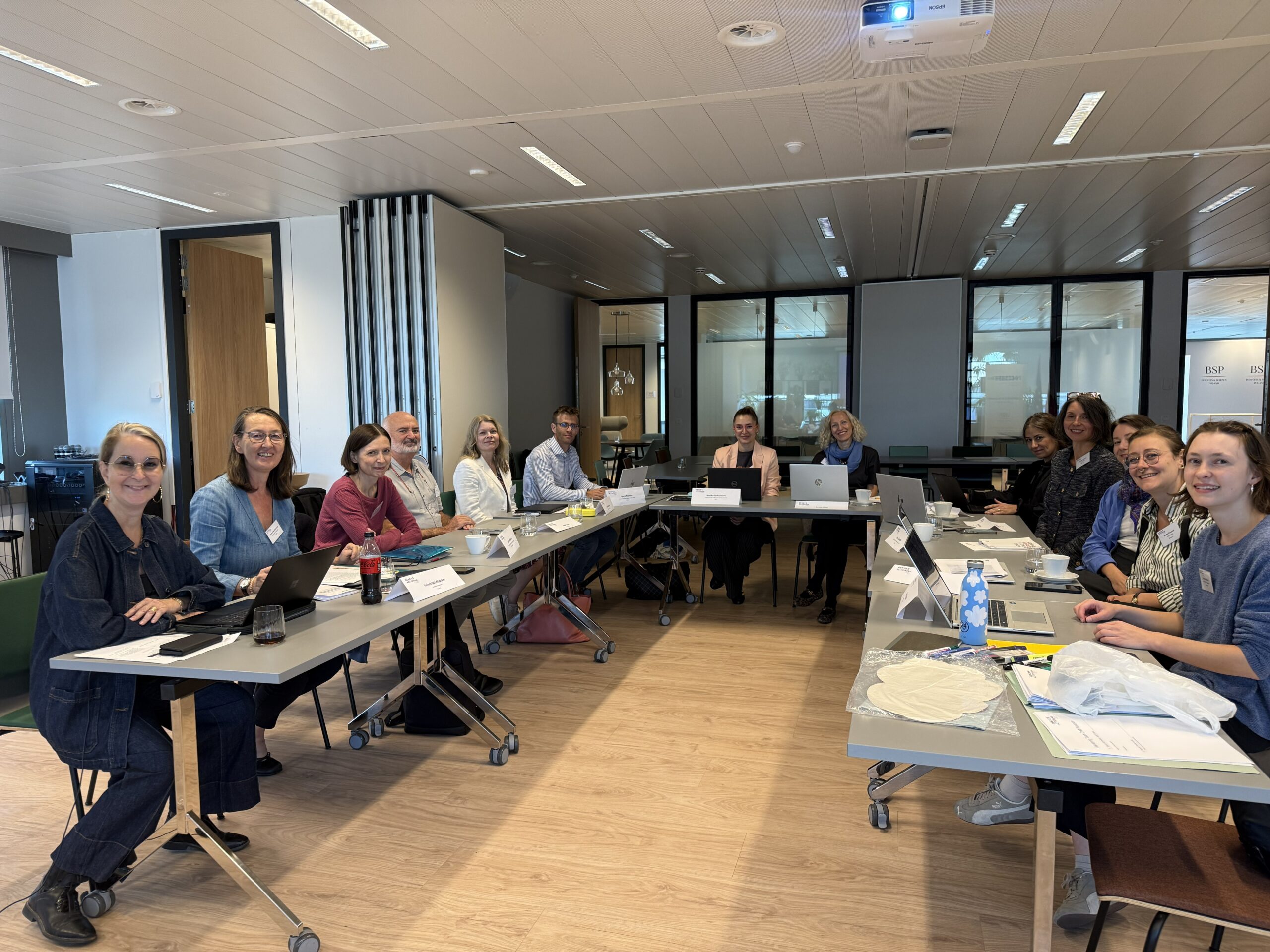
Back to news & eventsIn late September, the launch of the GENDERACTIONplus2027 Community of Practice brought national authorities (NAs) and research and innovation funding organisations (RFOs) together to begin a new phase of collaboration on inclusive gender equality in research and innovation.
Following the meeting, Emmalynn Hansen spoke with Sophia Ivarsson, Programme Manager and gender equality expert at Vinnova, Sweden’s innovation agency, and co-lead of the Research and Innovation Funding Organisations Circle. Sophia reflects on the launch, the diverse experience within the group, and how thematic mentoring teams will help members learn from one another and test approaches in their own organisations.
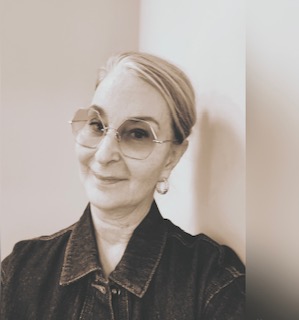
Why is it important to involve RFOs in advancing inclusive gender equality in research and innovation?
Sophia: Research funding organisations have a particularly important position because we sit between policy ambitions and the everyday practices of the research and innovation system. Through the way we design funding calls, formulate requirements, organise evaluation, monitor outcomes and interact with applicants, RFOs can help translate broader gender equality and inclusiveness objectives into practice.
But RFOs face specific constraints and challenges. What can actually be implemented depends on our mandates, national legislation, the data we can legitimately collect and use, and the instruments available to us. That is why it is so important that RFOs are involved in developing these approaches, rather than simply being expected to implement solutions developed elsewhere.
We have observed that adapting European policy objectives to different national contexts is both necessary and challenging. Although differences in national legal and institutional frameworks require flexibility, varying standards and requirements across RFOs can lead to inconsistent implementation of the same objectives. By reflecting collectively on these approaches, the circle can help identify where standards need to be adapted and where greater alignment may be beneficial.
How will the work of the RFO Circle evolve in the current project compared to GENDERACTIONplus?
Sophia: We see the new RFO Circle as building on a very important lesson from GENDERACTIONplus: peer learning between funding organisations is extremely valuable, but we now want to take it one step further. In the previous project, we created a space for exchange, sharing experiences and identifying common challenges. In the new project, the ambition is to make that collaboration more continuous and more closely connected to implementation. The major development is therefore the mentoring-team approach. Groups of RFOs will work together around a shared thematic priority over a longer period of time. Importantly, the model is not based on the idea that some organisations are simply “experts” and others are “learners”. It is deliberately bifocal: an organisation may have substantial experience in one area while needing support in another.
How will the RFO Circle work concretely?
Sophia: The mentoring teams will be the core working modality of the circle. They will be groups organised around thematic priorities corresponding to the ERA policy actions on inclusive gender equality. The teams will combine different levels of experience and work on one ERA-related topic for approximately one year, with the possibility of changing focus later.
Members will bring concrete cases and implementation challenges from their organisations. Together, they can discuss possible approaches, test ideas or tools in their own organisations where appropriate and then bring those experiences back to the group. These mentoring teams are the place where deep work on concrete challenges is done. The mentoring teams will meet online several times. The idea is to keep the format simple, check progress, examine one or two real cases in depth, identify ideas to test and agree on next steps. That accumulated experience from the mentoring teams can then feed back into the wider circle and the other parts of the project, including capacity building, monitoring, policy learning and tool development.
What new priorities and needs will the RFO Circle address?
Sophia: One important aspect is that we want the priorities to emerge from the actual needs of the participating RFOs. If several RFOs encounter the same barrier, that is important knowledge. It can tell us where we need new tools or capacity building, but also where solutions may require action at another level of the ERA system.
How do you hope to reinforce the role of RFOs in advancing gender equality and inclusiveness through the work of the RFO Circle?
Sophia: Our hope is that the circle will strengthen RFOs in two ways. First, internally, by giving organisations practical knowledge, colleagues to learn from and approaches that they can adapt and test within their own contexts. Second, collectively, by making the experiences of funding organisations more visible in European policy development. This is why the dialogue between RFOs and National Authorities is important. The circle should provide a way for experiences from everyday funding practice to inform the broader policy conversation, while at the same time helping RFOs understand and implement evolving ERA objectives.
What can you share as key takeaways you’re taking from the launch meeting?
Sophia: One of our strongest takeaways was the diversity of the RFOs around the table. We have organisations coming from many different national contexts and funding systems, and with very different levels of experience in different areas.
The discussions also reinforced the sense that there is a real appetite for practical exchange. People are interested not only in hearing about good practices, but also in discussing the difficult parts. What have you tried? What happened? What barriers did you encounter? And what would you do differently?
Another important takeaway for us is that there is already considerable knowledge within the group. This really confirms the value of the bifocal mentoring approach: everyone potentially has something to learn, but everyone also has something to contribute.
“Everyone potentially has something to learn, but everyone also has something to contribute.“
What are you most looking forward to as the CoP evolves?
Sophia: What we are looking forward to is seeing what happens when the mentoring teams start working on real cases over time. It is relatively easy to exchange good practices in a workshop. It becomes much more interesting when someone takes an idea back to their organisation, tries to adapt it to their context, encounters resistance or unexpected problems, modifies the approach, and then brings that experience back to the group. Because the circle brings together such different RFOs, we are also looking forward to seeing whether we can identify patterns across contexts. If we can capture that collective experience, we think the circle can produce something much more valuable than simply a collection of good practices. It can help us develop a more realistic understanding of what it actually takes to advance inclusive gender equality through research funding.